Approach to learning brainstem neuroanatomy
- Learn the names of the cranial nerves and where they emerge from the brainstem
- Understand anatomic and functional difference between a cranial narve and a brainstem nucleus
- Understand Embryological origins of brainstem nuclei positions
- Know the broad functions of each cranial nerve
- Know broad idea of where nerve runs with brainstem level
- Appreciate longitudinal extent of each brainstem nucleus
- Know blood supply of each part of the brainstem and likely targets of stroke in each area and its effects.
Running commentary Objectives
cranial nerves 1-12 travel down the brainstem
cranial nerves vs brainstem nuclei nerves are highways to particular areas and may carry fibres that serves more than 1 function nuclei are groups of cell bodies that serve a function and can go many places
10 cranial nerves
15 brainstem nuclei
embyrological origins of the brainstem nuclei positions
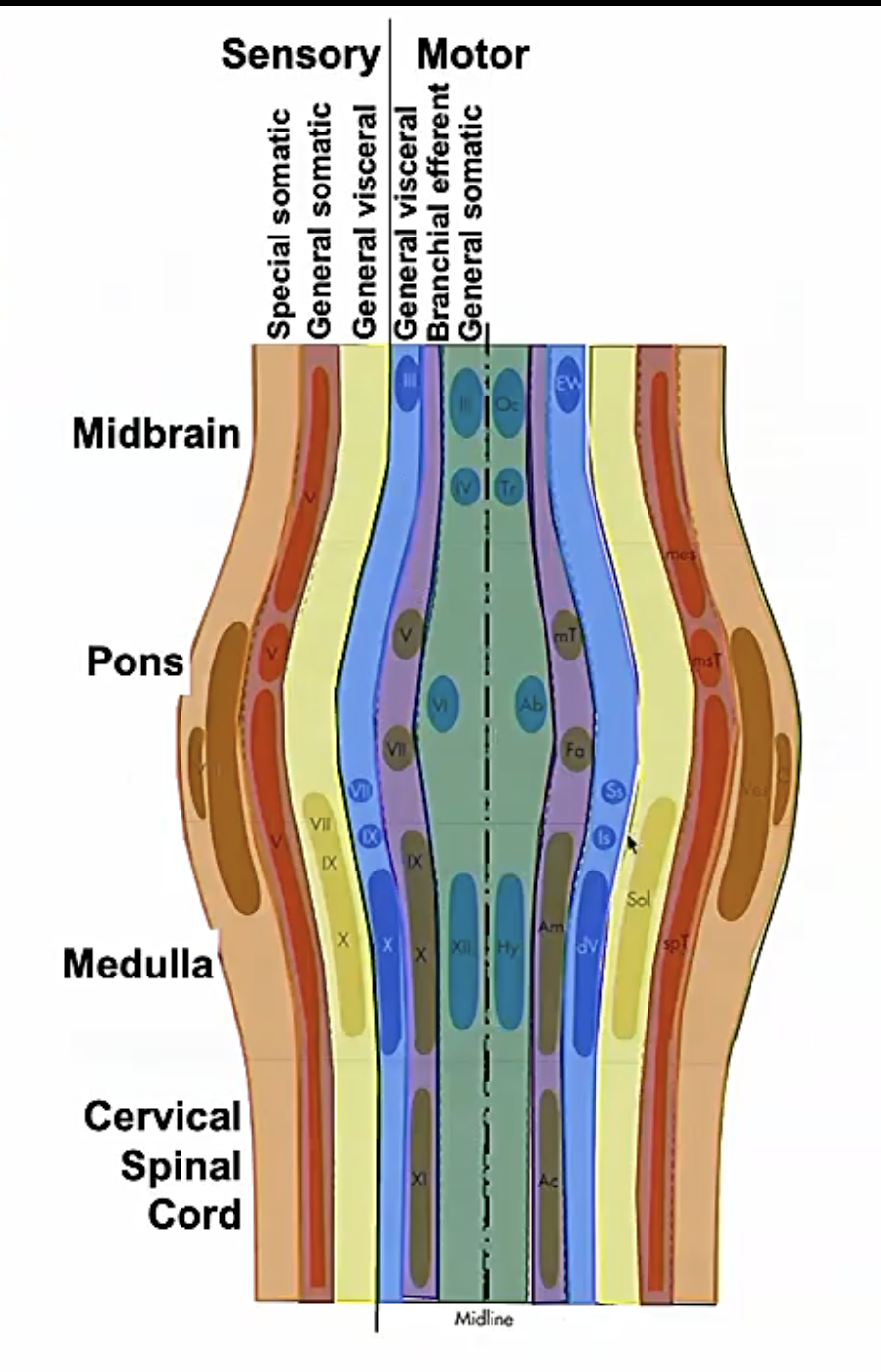
there is the brainstem and neural tube in the 6 wek embyro, and the pons area flexes to make a bend, where we see a structure change from alar lamina sensory and basal lamina motor (like in the spinal cord) with the sulcus limitanes to a dfferent structure with each longitudinal column having its
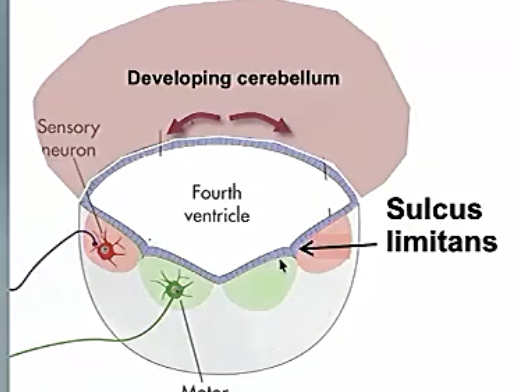
this means that the nuclei are going to be in a set region each, and therefore each nerve will have to interact with certain regions
from outer to inner it goes special sensory somatic sensory, visceral sensory (+ taste), visceral motor (parasympathetic), branchial (from a different muscular origin), somatic motor
mixed nerves carry fibres from 2 locations
pure nerves carry from 1 location
pure nerces incluse 1, 2 and 12 for motor and 8 for sensory (vestibulococal)
Know the brain functions of each cranial nerve
flashcard:
cranial nerve names and functions