Learning Objectives
- Consider contributions to healthy development and an ecological model of maltreatment
- Identify sequelae of child maltreatment on brain development and the emergence of physical and mental health problems
- Identify and explain biopsychosocial pathway/mechanisms that may explain associations between child maltreatment and its consequences
- Identify protective factors and resilience in development when maltreatment has occurred
Ingredients for healthy development
- Attachment
- healthy attachment to caregivers to give support
- Cognitive
- safety leads to curiousity and exporing
- Social
- empathizing social understanding etc
- Physical
- growth and biological developments
Understanding development
- Bronfenbrenners ecological systems theory
- Meihana model
- Fonofale monel
- Ecological model of maltreatment ← this is good to remember
These are all models which emphasise importance of a persons surroundings influencing aka holistic models.
Types of child maltreatment
The types of child maltreatment are:
- Physical abuse
- Emotional abuse
- Sexual abuse
- Neglect
Physical sequalae
higher stress leads to chronic inflammation.
stressors can also lead to different brain development.
the effects from one result of abuse often feeds around into other effects so one thing may have wide reaching effects
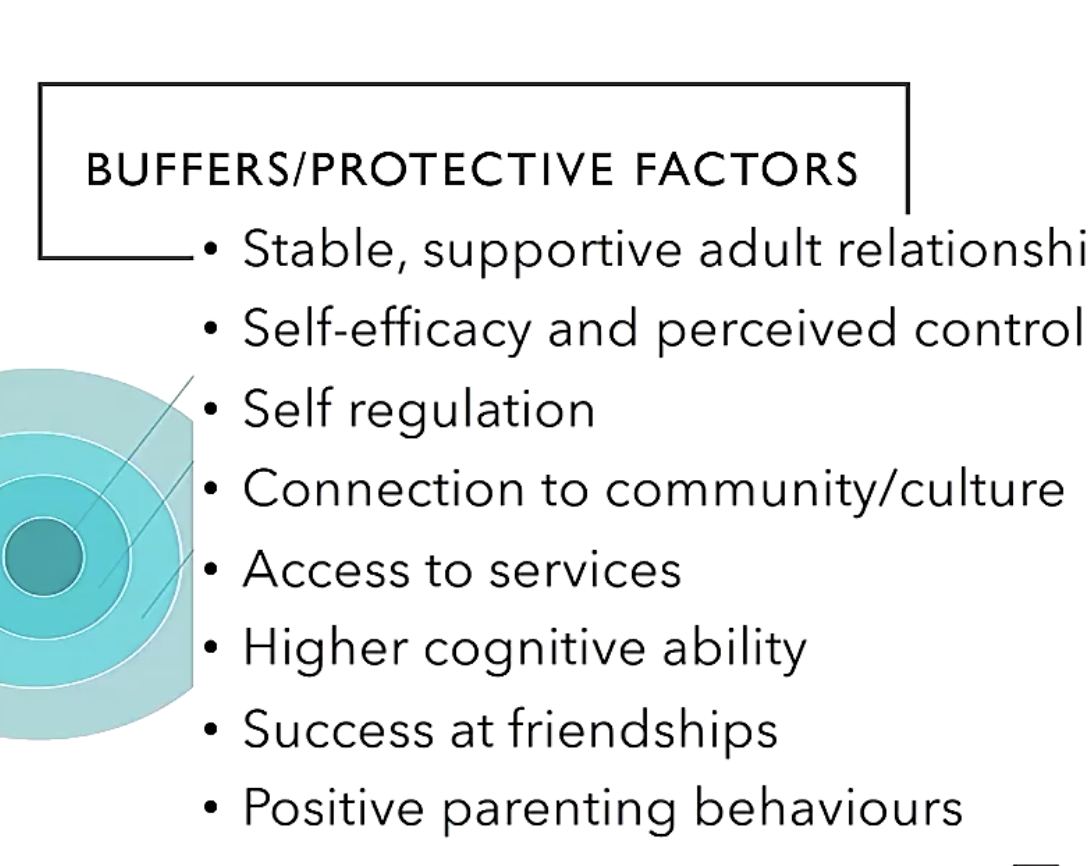
these are protective factors which lead to help prevent stressors from causing immediate damage