Major Depressive Disorder Bipolar disorder
bipolar is depression with manic phases. manic phases are euphoric high energy grandiose periods. mania and melancholia is not a new concept and is well known in history.
There is a specturm of mood disorder diagnoses 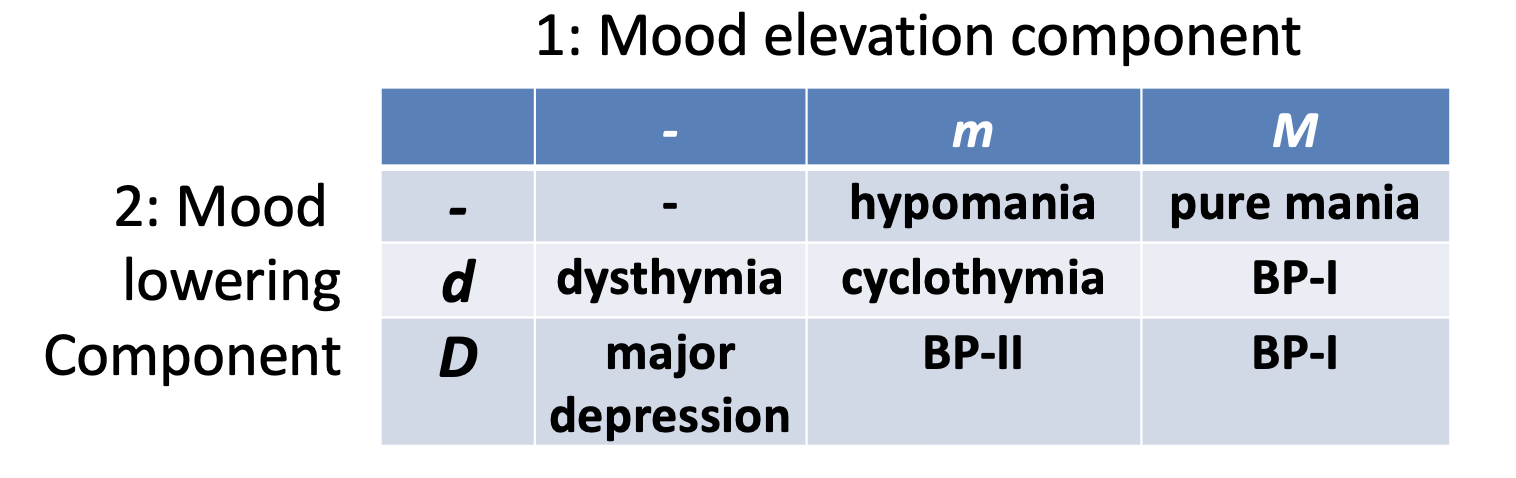 And we will focus of major depression and BP
these are the criteria
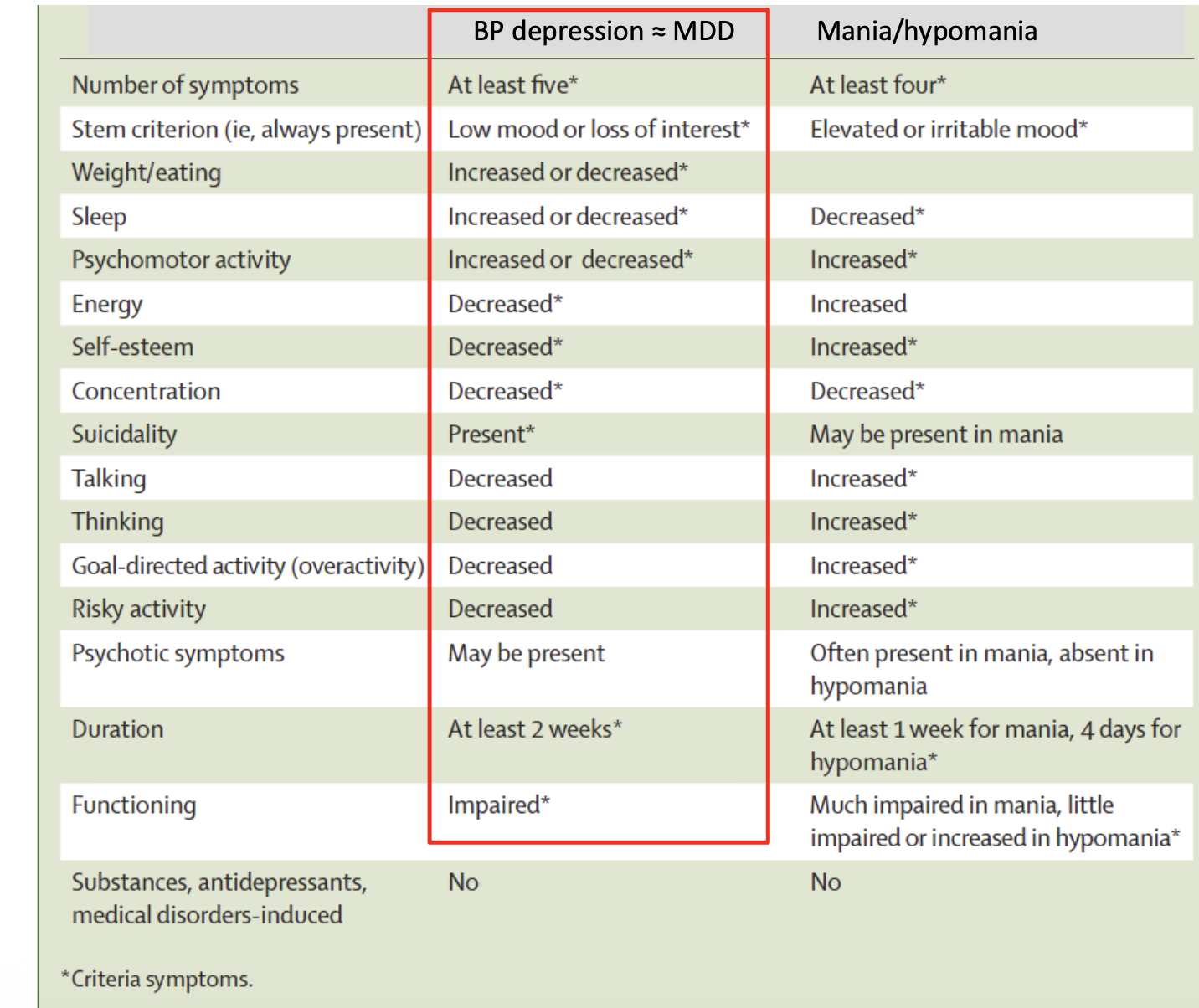
BIpolar epidemilofy the onset is around 18 for BP-II and 22y for BP-I. it is relatively equal between M and F and unmedicated has 4 episodes a decade.
BP is a highly genetic disorder with 75% of having it if your identical twin does and recurs 2x more then MDD
unknown pathophysiology but there is reduced diffusability in white tissue tracts like cingulum and corpus callosum
adverse health nad social association
5-10 year delay in establishing diagnosis from first modd swing and dies 89y before general population. there is a 8-10 time higher suicide risk. BP sufferers have high rates of incarceration.
associated with unemployment
Treatments non-drug intervention
- psychological and social management
this is education about the disorderm and treatment, how to avoid slippping and maintaining a stable life, as well as understanding warning signs of an episode and how to deal with it. case management where you keep good understanding of disorder progresssion and therapy/ support networks
-
hospitalisation
this is to give a safe and low stimulus environment and well as to supervise medication.
Drug treatments
- treatment of acute episodes
- mania
- BP depression
- precention of mood episode recurrence
acute mania use mood stabiliser and antipsychotic
use antidepressants cautiously in BP along with mood stabiliser. it is difficult to demostrate antidepressant benefit. antidepressants can induce mania and rapid cycling.
ketamine is possibly effective
mantenance of BP disorder Lithium is first choice, you need to maintain adequate blood levels and check helath of individual. poor tolerability can reduce compliance
valproate/carbamazepine/lamotrigine no obvious efficacy difference less controlled data. quetiapine is a monotherapy
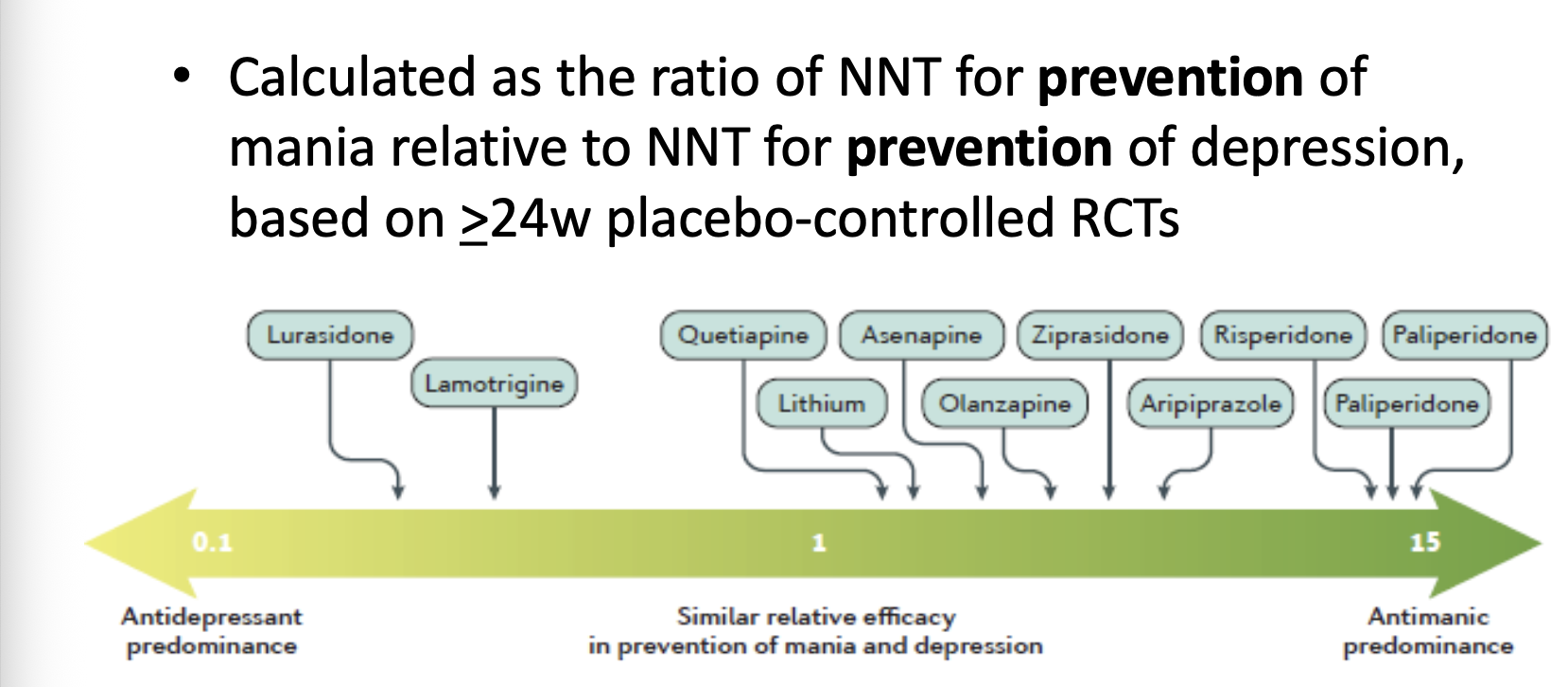 the treatments exist on a spectrum between mainly antidepressant and antimanic to mainly both
maintainence is generally better for valproate + Lithium
Severe depression
in sev ere depression there is less psychological factors and mostly biological factors
Melancholic depression: mood: intense unremitting apprehesnsion psychomotor disturbance: jittery or slow as molasses cognitive impairment lowered concentration and memory vegetative dysfunction interrupted sleep amd reduced appetitie psychosisi si often rpesent common themes are nihilistix delusions of hopelessness, guilt sin ruin or disease.
Depressive psychosis mood congruent delusions (poverty death guilt) mood congruent hallucinations in 50%
- auditory: hearing dead ancestors calling out
- olfactory smelling ones body decaying
- tactile feeling onbes intestines falling out from rot cotard syndrome
epidemiology of melancholia 5% of all cases of MDD M=F likelihood increases with age
hypercortisolemia and sleep eeg changes - reduces latency to first rem period
hospitalsation and maybe MHA institionalisation
- high risk of suicid eand self neglect antidepressant and antipsychotic needed ECT (electroconvulsive therapy) very low response rates to PBO and psychotherapy