Case 1. 40 minutes.
Belle Ringer, a 25-year-old Pākehā female, has a 4 year history of recurrent episodes of crampy abdominal pain, fever, diarrhoea and weight loss. She has been diagnosed with inflammatory bowel disease (IBD). *Medication has helped but she is especially troubled by bouts of severe diarrhoea lasting for several days.
Part A. 10 minutes.
Belle’s diarrhoea can cause electrolyte and acid-base abnormalities as well as volume depletion.*
Question 1: Describe and explain the changes you would expect to see in the following plasma electrolyte measurements with severe diarrhoea:
- Plasma sodium concentration
- Plasma chloride concentration
- Plasma potassium concentration
In secretory diarrhoea, there is increased secretion of Cl- ions into the gut lumen, and Na+ ions and water follow it. As there is more secretion and absorption doesnt match it and so we see higher Na+ and CL- in the colon. The colon exchanges na+ for k+ and cl- for hco3- and if there is more of the salt there will be significantly more exchagne and large amounts of k+ and hco- will be removed from the body to the gut lumen. this will result in acidaemia and hypokalaemia. sodium and cholride will be slightly reduced as they are resorbed to a degree and we are losing water so down on both counts means conc the same. k+ drops though
Question 2: Belle has an arterial blood gas taken. Selected results are shown.
| Parameter | Value | Reference range |
|---|---|---|
| pH | 7.33 | 7.35 - 7.45 |
| HCO3 | 17 mmol/L | 24 - 30 mmol |
| PaCO2 | 33 mmHg | 37 - 43 mmHg |
| Interpret the arterial blood gas (ABG) results AND explain how they could have come about in severe diarrhoea. |
As previous.y stated we are seeing lower ph because of lower hco and the body is attempting to compensate by reducing the amount of co2 which makes the blood more basic to redice the acidic change to homeostasis. normall they kidneys would help out but there isnt enough water in the plasma or body foir that matter to perfuse them adequately
Part B. 10 minutes.
Belle develops a bowel obstruction and is admitted to the surgical ward. On the ward round the consultant quizzes their team on the difference between Crohn’s Disease and Ulcerative Colitis.
Question 3: BRIEFLY state how each of the following features presents in Crohn’s Disease and in Ulcerative Colitis.
- Bowel segment involved
- Pattern of involvement
- Presence of granulomas
- Ulcer morphology
Crohns can occur anywhere in the gut lumen. often jumps along with skip lesion. need to do granulomas and ulcer morphology yes granulmome and lesions can be knifelike and sharp
ulcerative colitis often the rectum upwards to the ascending colon can be affected. this can vary though. happens continuously, lesions have a cobblestone appearance and no granuloma
Question 4: One of the images below represents a biopsy of a section of Belles’s gastrointestinal tract. The other image shows a different type of IBD.
| Image A | Image B |
|---|---|
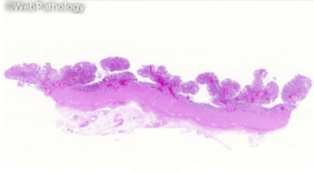 | 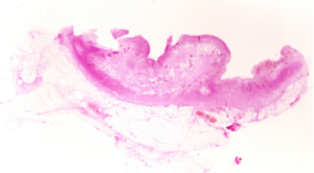 |
| For EACH image identify the type of IBD, AND BRIEFLY provide your rationale for your identification. |
image a is ulceraive colitis doe to pseudopolyps on surface
image b is chrons due to granuloma
Part C. 10 minutes.
Question 5: Describe the anatomical features that distinguish the small intestine from the large intestine AND Where relevant, how these would help identify whether the obstruction was a small or large bowel obstruction on an x-ray radiograph. small intestine is a relatively uniform tube, on microscopic observation villi and crypts will be observed.
the large intestine as haustra which are little pockets to aid the storage function of the large intestine. it also has bands of muscle called teniae coli, which assists in mass movement. the large intesting is also larger. haustra is able to easily be seen on zray with barium meal or enema. (prolly enema i think.)
Part D. 10 minutes.
Question 6: Describe the mechanism of action of TWO (2) drug classes commonly used to treat IBD. coritcosteroids immunosuppressant ( azarioprine)
Case 2. 30 minutes.
Mere (she/her) is a 55 year-old Māori retired engineer. She visits her general practitioner (GP).
Today, Mere will see the practice locum doctor, who is meeting Mere for the first time. Reviewing Mere’s notes before seeing her, the doctor learns that Mere was diagnosed with hypertension about six months ago, at which time the GP prescribed a once daily antihypertensive medicine. It is also noted that Mere’s GP explained how high blood pressure can lead to serious health complications, including heart disease, stroke, and kidney damage. Mere’s questions about the role of medication in lowering blood pressure and preventing these complications were answered.
Mere’s blood pressure was taken by the practice nurse before the doctor spoke to Mere, and it was found to be 160/95 mmHg.
The locum doctor decides to use the Hui Process to guide their consultation.
Part A. 10 minutes.
Question 8: Name AND describe the four stages in the Hui Process. mihi This is the initial greeting whakawhanaungatanga this is making connections and understanding each others place in the world kaupapa meaning floor, foundation, ground this is the clinical? section where history and examinations are performed poroporoaki this is goodbye and next steps
Question 9: Discuss why the Hui Process is a useful framework for interactions with Māori patients.
It shows appreciation and respect for maori culture and more intuitive for those brought up in and around maori culture. These people will understand it and feel more comfortable, as more like the social interchanges in maori culture (I specifically say those brought up in maori culture as apprecitation of this comes from your culture, not your genes. Everyone can benefit from this.)
Part B. 12 minutes.
Question 10: List THREE (3) lifestyle factors that could be potentially contributing to poor control of Mere’s hypertension? lack of adherence (low hanging fruit) poor exercise Lack of social support?
Question 11: Mere would like to engage in more frequent exercising, however this has been difficult for her. What might be a barrier for her? (List THREE (3) potential barriers.) Lack of knowledge in how to start injuries preventing exercise poor social support (family scorns her?)
Question 12: To get an idea of Mere’s motivation for changing her lifestyle, the Stages of Change model could be used.
Describe what Mere’s behaviour may look like if she is currently in the preparation stage of this model
she is learning about exercise, researching running group, buying gear, looking at routes, planning exercise schedules.
Quesiton 13: Mere was motivated to change her lifestyle.
She began to exercise vigorously and injured her right leg, which developed into persistent (chronic) pain.
What is persistent (chronic) pain? (MCQ)
- Pain that lasts for less than a day
- Pain that only occurs after an injury
- Pain that lasts beyond the natural healing time
- Pain that disappears once the tissue damage is treated
- Pain that is a false pain alarm
Question 14: Which of the following best describes factors that could influence the pain experience? (MCQ)
- Beliefs/concerns (e.g., no pain no gain)
- Cultural issues (e.g., expectations)
- Existing medical conditions
- Psychological factors (e.g., anxiety, anger)
- All of the above
Part C. 8 minutes.
During the consultation, Mere also revealed that her mother had experienced psychotic symptoms for approximately 2 months following the death of her sister.
Question 15: Complete the sentences below about the diagnostic criteria for psychotic spectrum disorder.
- Brief Psychotic Disorder
- Delusional Disorder
- Schizophreniform Disorder
- Substance Induced Psychotic Disorder
- Schizotypal Personality Disorder
- Catatonia
- Schizoaffective Disorder
- Schizophrenia
- Schizophrenia (I assume there is the option to use this twice)
In the case of Schizophrenia, the DSM 5-TR stipulates that psychotic symptoms needs to have been present for a period of 6 months and include at least one month of active symptoms. Whereas in the case of Schizophreniform Disorder symptoms need to be present for more than 1 month but less than 6 months.
For Brief Psychotic Disorder to be diagnosed, there needs to have been a sudden onset of psychotic symptoms that lasts for less than 1 month.
Schizotypal Personality Disorder is characterised by distorted thinking and/or eccentric behaviour and there are two types of Schizophrenia, namely bipolar and depressive types.
Question 16: Looking further through her file, the locum doctor notices that Mere has presented frequently to the emergency department (ED) and emergency psychiatric services (EPS) in the last five years for a range of unrelated complaints. It was noted that Mere had a tendency to present as angry, demanding, and easily distressed.
According to the biopsychosocial model of personality, what are the two factors that interact to determine personality traits? genes and lived experiences
Case 3. 40 minutes.
Holly Graham is a 9 year-old female taken to the GP by her mother, who noticed that Holly gets ‘wheezy’ when running around with her friends. Holly has also been coughing during the night recently and sleeping poorly. Her mother explains that this has happened before but that Holly’s breathlessness had got more pronounced when Holly ‘came home with a cold’ (upper respiratory tract infection). The GP examined Holly’s respiratory system and noted she was short of breath. The GP heard high pitched wheezes on auscultation.
Part A. 10 minutes.
Question 17: Briefly describe the nerve supply of the lung.
Question 18: State two differences between bronchi and bronchioles.
Question 19: List the layers that make up the respiratory membrane.
epithelia (type i Pneumocytes) fused basement membrane endothelia
Question 20: Name the labelled structures in the chest x-ray radiograph below.
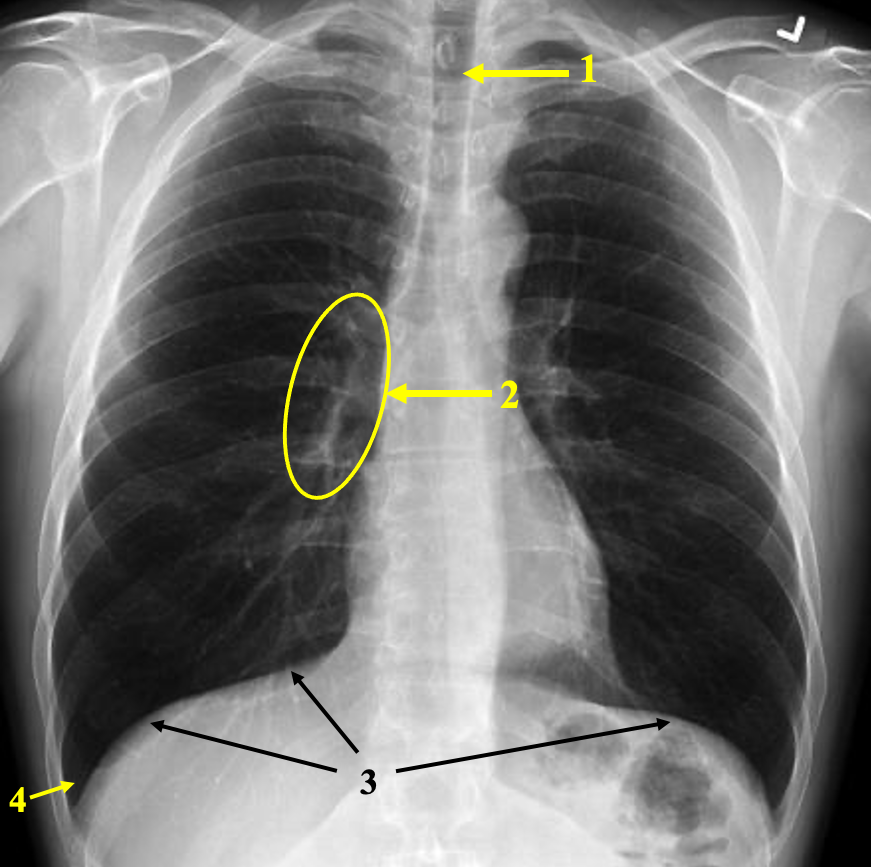 trachea
hilum of lung
diaphragm
costophrenic recess
trachea
hilum of lung
diaphragm
costophrenic recess
Part B. 10 minutes
Holly’s shortness of breath suggests her work of breathing (WOB) may be increased.
Question 21: What are the determinants of WOB? How are they most likely to have changed in Holly’s case? lung deformability airway friction
Question 22: Holly’s lung function tests, performed when she was short of breath, are shown below.
| FEV1 litres | VC litres | FVC litres | RV litres | ||
|---|---|---|---|---|---|
| Predicted | 2.6 | 3.1 | 3.1 | 1.9 | |
| Actual | 1.6 | 2.5 | 2.4 | 2.2 | |
| Bronchodilated | 2.2 | 2.9 |
Indicate, with reasons, what type of lung dysfunction Holly has, AND whether it is likely to respond to a bronchodilator. obstructive and yes broncho dilated values are significantly different to justify usage
Question 23: Discuss the role of peak expiratory flow rate (PEFR) measurements in the investigation and management of Holly’s problem. it is a test to show how high her airway friction is. Does regular measurements will reveal how well she is managing her asthma
Part C. 10 minutes.
After reviewing Holly’s notes, the GP decides to commence Holly on a single combination pressurised metered dose inhaler (m.d.i.) containing salmeterol and fluticasone.
Question 24: Describe the mechanism AND site of action of salmeterol, and fluticasone.
salmeterol is a lABA act os the beta2 adrenergic recptors in smooth muscle and epithelia to trigger bronchodilation and improves mucous and allergen clearance.
This happens as the LABA/SABA binds to the beta 2 adrenergic receptor which activates cAMP which activated PKA which increases conductiance of ca2= sensetive k+ channals which leads to hyperpolarisation and relaxation.
fluicasone is a ICS acts on the dna (is a steroid) it has for reaching effect on: macrophages adrenals really all cells it generally downplays inflammation which we need
Question 25: What are the possible oral adverse effects of fluticasone when using an m.d.i. AND how would you mitigate them? high doses can lead to systemic absorption, adrenal insufficency and osteoporosis as well as cushingoid symptoms.
Question 26: Would either of these drugs act as rescue inhalers?
If not, how would you adjust the prescription to provide immediate relief in the event of an acute respiratory exacerbation?
Short acting LABAs such as formeterol provide both immediate relief as well as long term maintainence (8h so not that long term)
Part D. 10 minutes.
Holly was diagnosed with asthma. One month later Holly and her mum return to the GP for follow-up regarding her asthma control. The practice nurse gives Holly and her mother an Asthma Control Test to complete. This reveals that Holly’s asthma is still problematic and the GP wants to know why.
Question 27: The GP asks questions related to Holly’s compliance with inhaler therapy and to assess whether Holly and her mother are aware of asthma triggers. Name ONE (1) factor aligned to how a medication is administrated that could impact compliance with inhaler therapy in a child, AND explain why it could. if they are not administering correctly, eg incorrect inhaler mouth angle, they could experience unpleasant side effects as well as seem useless which decreases the desire to adhere to the mediacation.
Question 28: Holly’s known triggers appear to be exercise and respiratory tract infections, but there could be more that the doctor has not yet learned about. List THREE (3) other asthma triggers that a child could be exposed to in their day-today activities. cold allergens chemical irritants (cigarette smoke)
Question 29: Holly’s mother explains that she had a family friend some years ago who had died from her asthma. Select the changes that occur to arterial blood gases and the pH when a patient with a severe asthma attack becomes exhausted and develops type 2 respiratory failure.
| For each of these | Choose high low or no change or each |
|---|---|
| PaO2 | high no change low |
| PaCO2 | high no change low |
| pH | high no change low |
| ph up pa co2 up pa o2 down |
Case 4. 25 minutes.
The Das family, including Mum (Ayesha), Dad (Ishmael), Grandma (Bibi), and three children, recently arrived in Aotearoa New Zealand from Bangladesh. Ishmael is a Civil Engineer, and Ayesha is a nurse. Because both parents are working, Grandma Bibi looks after the children, who are aged 5, 6, and 8. Ishmael, Ayesha, and the children speak English. However, Grandma Bibi does not speak any English at all. Bibi came with her family to the Emergency Department because she had acute abdominal pain, nausea and vomiting. She was admitted to an inpatient ward.
Part A. 10 minutes.
Question 30: Identify TWO (2) important elements to an effective doctor-patient relationship. Discuss why EACH of these are important. Trust as the patient needs to trust the docter to share pertinent information and the doctor needs to trust the patient to work effectively Respect as the patient needs to respect the doctor and hear what they have tot say and the doctor needs to respect the patient to hear what they have to say as well as maintain an effect releationship
Part B. 5 minutes.
Question 30: According to Hofstede’s cultural dimensions, Bangladesh is a collectivist culture with a high-power distance. Identify AND briefly describe TWO (2) issues a doctor would need to consider when applying these cultural dimensions to their interactions with the Das family. invite the whole family to do consults and talk to the head of the familt
Part C. 5 minutes.
Question 31: The test results show that Bibi has a large bowel tumour, which has caused an obstruction. As Bibi does not speak English, how should the clinical team communicate this information to her and her family AND who should they speak to? get an impartial interpreter to relay information. they should consult with the cultural specialists to understand who to talk to but probalby the patient
Part D. 5 minutes.
Question 32: Explain why the family might withhold information from Bibi? Not wanting to make her feel upset, could be for a variety of reasons.