What is Treatment adherence
Adherence is not blindly following orders. That is compliance. Adherence is active choice, responsibility and desire conform to congreuency between behaviour and agreed health reccomendations
Drop off in adherence
Adherences change due to a number of effects. The type of illness (acute 67% or chronic 50-55%), Lifestyle change are different with based on what it is (Diet is 13-76% and exercise is 65-90%).. diabetes has 20-40% follow diet and physical activity recommendations and 65-70% monitor blood glucose as recommended.
The time around a doctors visit adherence goes up and then it goes back down. We try to increase compliace
Consequences of Non-adherence
There can be the consequences for the patient:
The patients health condition worsens, and their risk of disease progression and complications increases. There is also reduction in effectiveness of treatment and delayed recovery. Prolonged hospitalisation, increased medical cost and reduced quality of life result.
- For their family:
Caregiver burden - time spent, distress and relationship strain all increases. Financial burden also increases
- For the doctor:
Increased workload leading to burnout, distrust and resentment toward the patient, giving up and blaming the patient (reinforcing stereotypes) all can result
- For the healthcare system:
Increase in cost and resources used. longer waiting lists, etc.
Why does Non-adherence occur
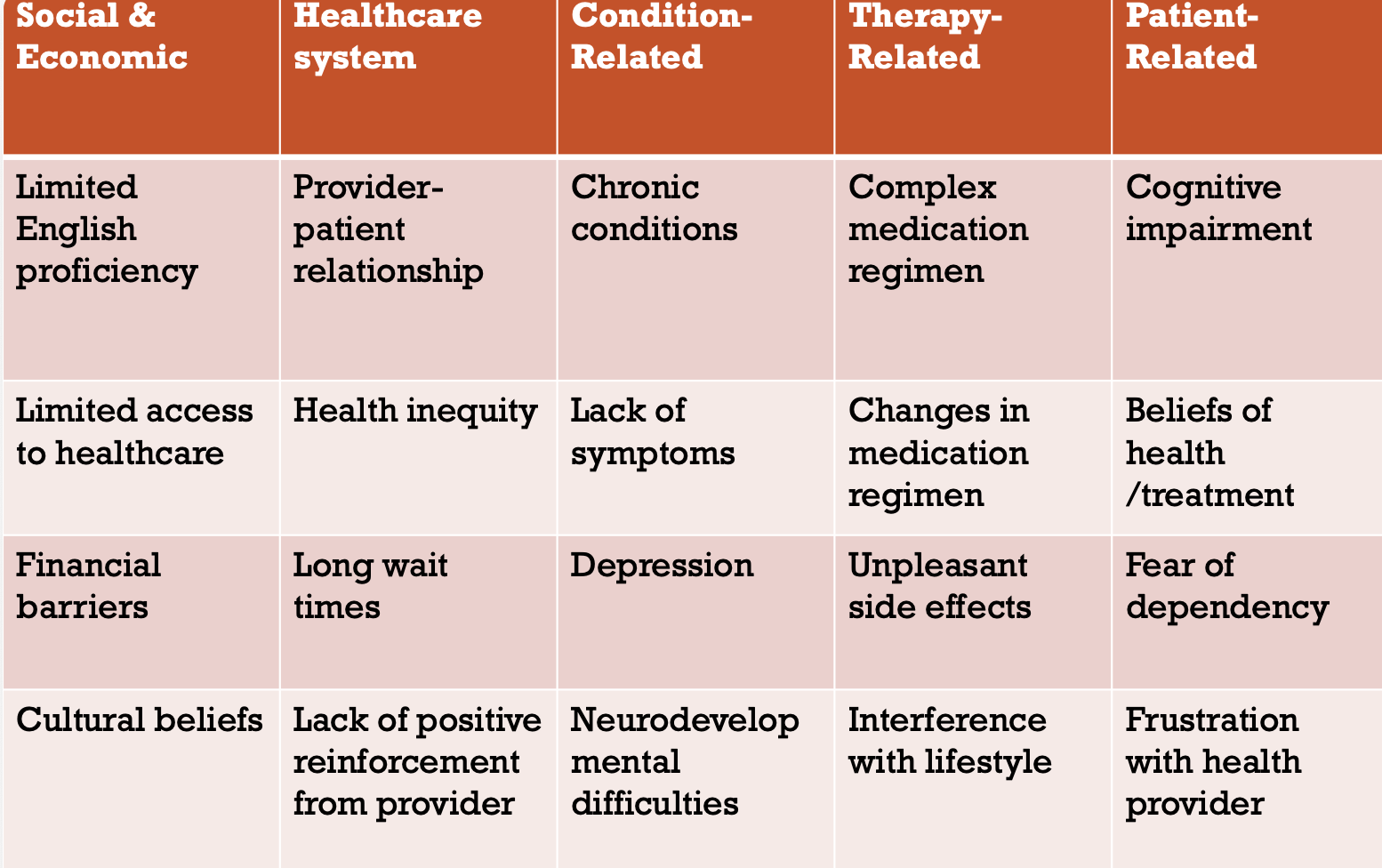
Strategies for raising adherences
Consider everyone to be at risk assess stages of changes assess past adherence patters Ask patient on their condifience in carrying out treatemnt identify barriers
Purpose oftreatment Past experiences with healcare and treatment Belief in and experience of benefits
practical
Prompts and reminders treatment education regular followup visits with patient continure to assess adherence and barriers to adherence referring to other ehalth professionals and work with them Practical and emotional support Memory support Routine