This lecture is on the gross anatomy of the male and female tracts funnily enough.
It covers:
- Male tract
- functions of the reproductive system
- Anatomical definitions of the pelvic region
- perineal triangles
- pelvic floor
- components of the male reproductive tract
- tracts
- accessory sex glands
- testicular descent
- layers covering the testes
- testes and epididymus
- testicular torsion
- cremester reflex
- scrotum and spermatic cord
- spermatogenesis
- ductus deferens and the ejaculatory duct
- prostate gland and prostatic urethra
- Anatomy of the penis
- Female reproductive system
- organs and components of the female pelvic region
- components and accessories of the uterus and ovaries
- ligaments
- parts
- fallopian tubes
- position of uterus
- pouches
- ovary
- structure of ovary
- simplified female reproductive system
- vagina
- fornices and cervix
- female pelvic floor
- female perineum
- vulva
- breast anatomy
Intro
The lecture begins with some general definitions of the reproductive systems and pelvic anatomy.
Functions of the reproductive system
The functions of the reproductive system is the produce the gametes (ova and spermatozoa), to produce the sex steroids, and to provide the means for the sperm and egg to meet. Most of the anatomy can be related to one of these 3 functions, with the exception of purely functional areas like skin or connective tissue.
Anatomical definitions of the pelvic region
The lecture lays out some definitions of anatomy surrounding the reproductive organs. These include:
- The pelvic girdle is made up of the 2 hipbones and the sacrum
- The perineum is the region below the pelvic floor and diaphragm
- LMP is the 1st day of the last menstrual period
- Embryo is up to 8 weeks after fertilisation
- Foetus is from the 9th week of gestation to birth.
Male tracts
Male perineal area and pelvic floor
The male perineal area (which is vaguely diamond shaped) is divided into urogenital and anal triangles.
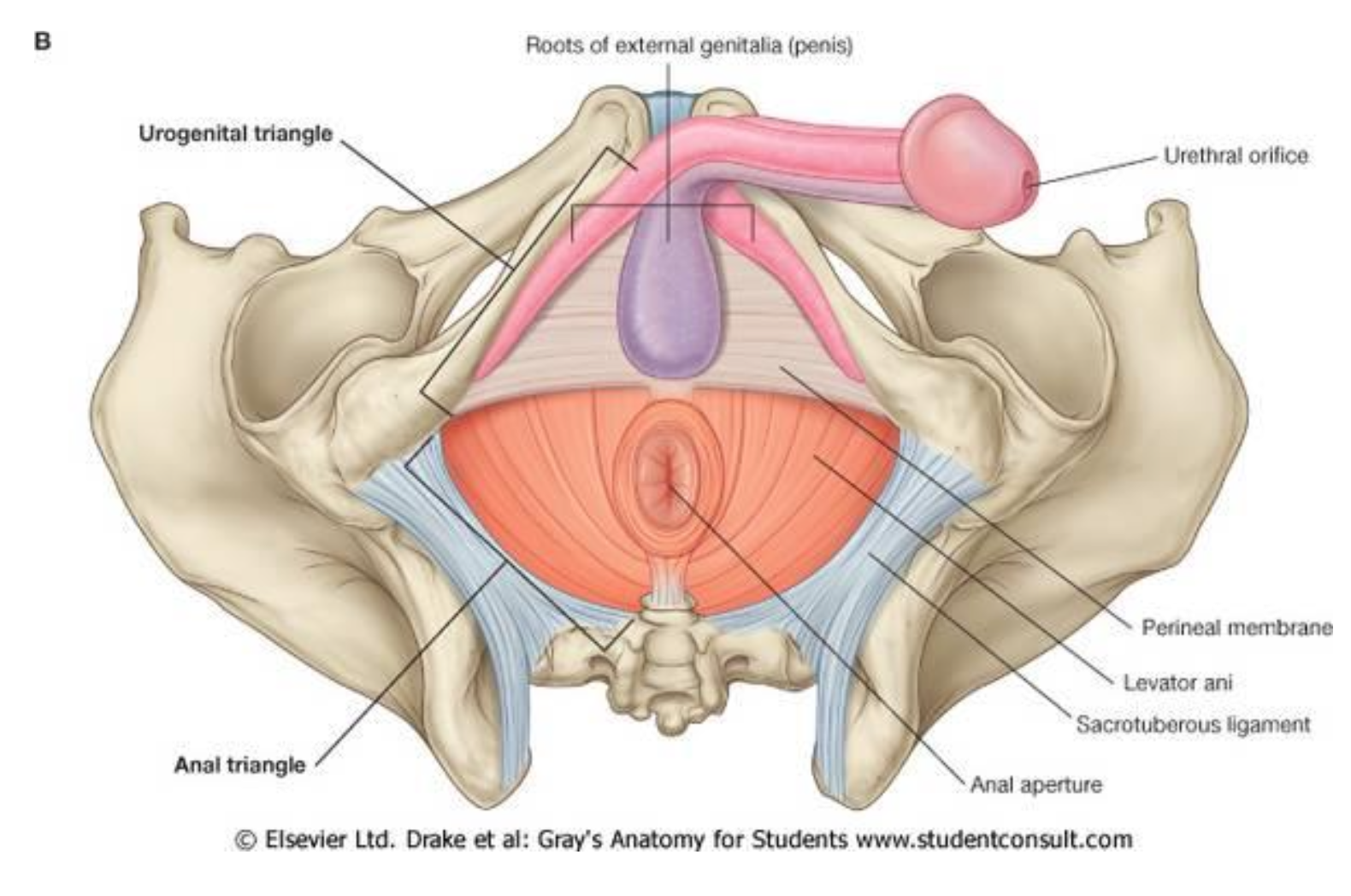
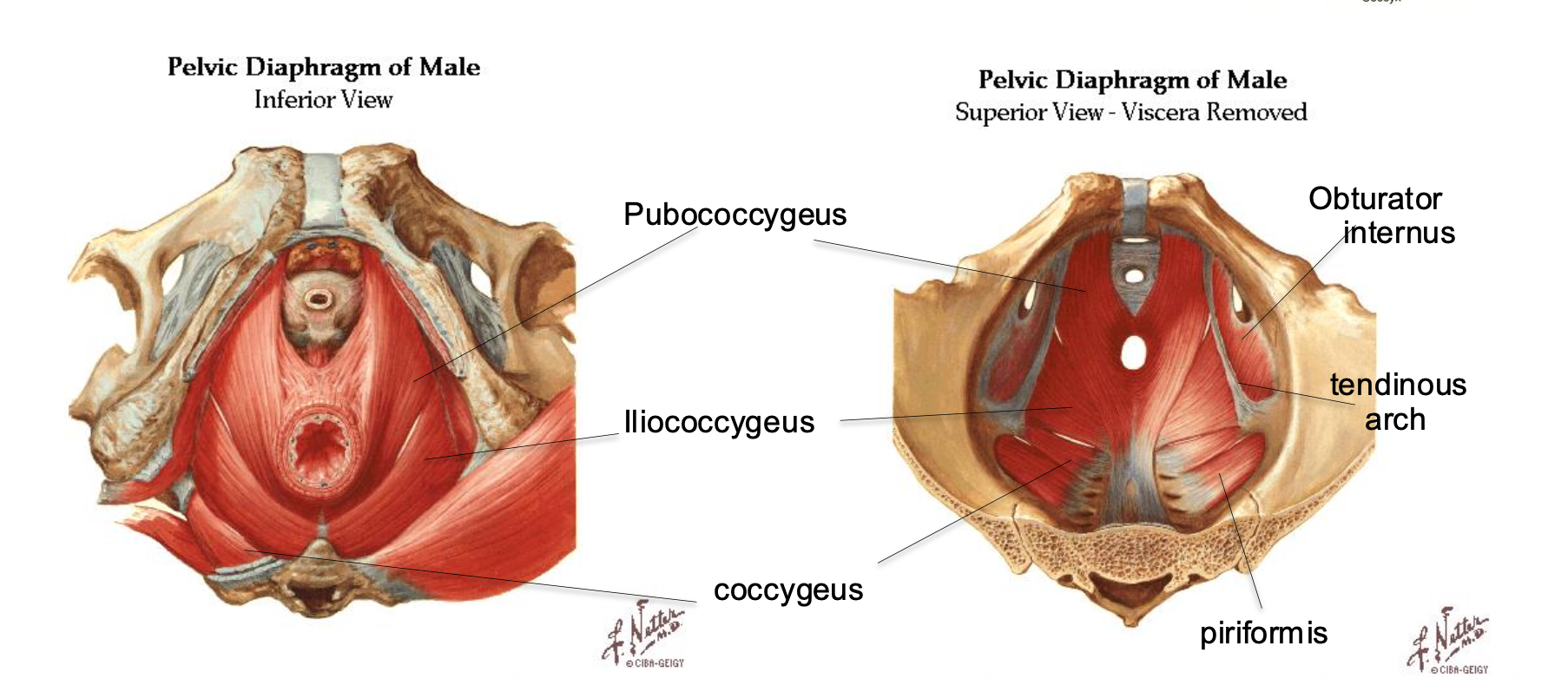
The pelbic floor is made up of muscle and it covers the pubic outlet to keep everything the the body. it is made of a few muscles, including the levator ani (composed of the pubococcygeus, and iliococcygeus) and the coccygeus muscles.
components of the male reproductive tract, Tracts, accessory sex glands
The male reproductive tract has a number of components to it including the the seminal vesicles, the vas deferens the prostate and the ejaculatory duct. There urethra is included in the urinary tract, and it is also part of the reproductive system.
Tract basically means pathway or in this case tube. Like the GI tract, reproductive tract is basically reproductive tubes. Tracts of white matter in the nervous system are not tubes, they come from the pathway meaning and are a pathway of impulses carrying information.
The accessory sex glands are the seminal vesicle, prostate and bulbourethral glands. They make up 60, 30, and 5% of the seminal fluids respectively.
Testicular descent and the layers covering the testes
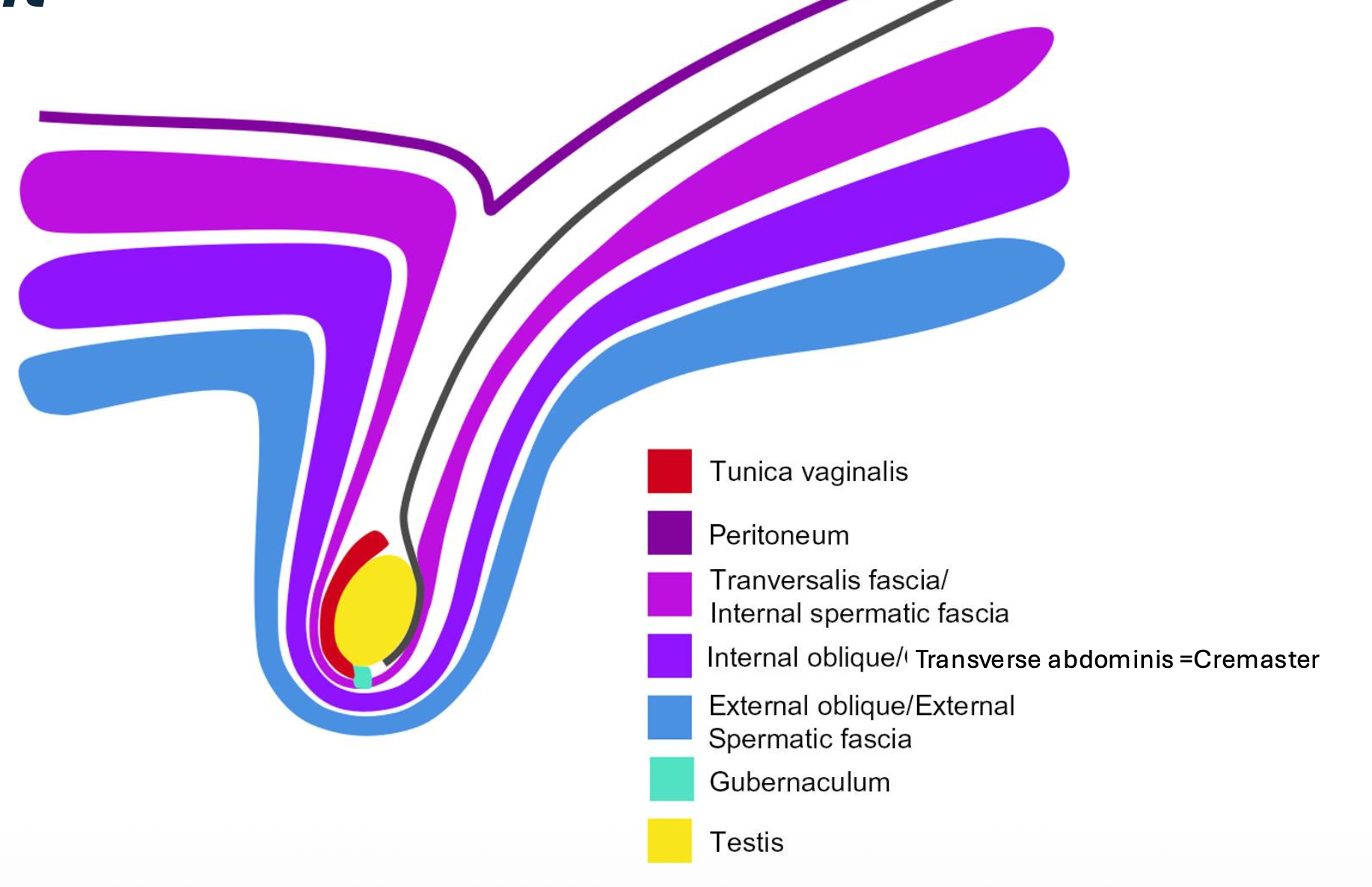
In the womb the testicles originate near the kidneys, and migrate to the scrotum, following the gubernaculum. When this doesnt happen properly it is termed cryptorchidism, and the surgical procedure to bring the testes down is termed orchidopexy. There is a risk of malignancy if the testes are not moved and infertility will result.
There is a few layers covering the testes, is pictured in this illustration.
testes and epididymus
- testicular torsion
cremester reflex
scrotum and spermatic cord
spermatogenesis
ductus deferens and the ejaculatory duct
prostate gland and prostatic urethra
Anatomy of the penis
Female tracts
- Female reproductive system
- organs and components of the female pelvic region
- components and accessories of the uterus and ovaries
- ligaments
- parts
- fallopian tubes
- position of uterus
- pouches
- ovary
- structure of ovary
- simplified female reproductive system
- vagina
- fornices and cervix
- female pelvic floor
- female perineum
- vulva
- breast anatomy